This week I want to explore the excitement in Asia, where handsome gains have been thrown up by Korea and Taiwan. Then a quick thought on the UK economy, and what is needed to put a spark into the great value in small and medium-sized businesses. And lastly oil, where the news evolves by the hour – or by the tweet!
Many of you might have already spotted the huge gains in the Korean stock market, around 90% just in 2026. Some of you might also have been pleasantly surprised by how this has spiked growth in your Asian funds. If you have been utilising our Dynamic Asia and Emerging Market Portfolio, you have certainly enjoyed sharp gains. All very exciting. We have certainly enjoyed these gains in the Dennehy Wealth discretionary portfolios.
I want to explore some issues which this raises, particularly if you are managing your own money.
So far in 2026 the Korean stock market (Kospi index) is up 82%. But this doesn’t do justice to the scale of the move:
· The Korean stock market is now bigger than the UK and India
· It has been driven by just two stocks linked to the panic into AI-related stocks…
· …it is like a table with only two legs!
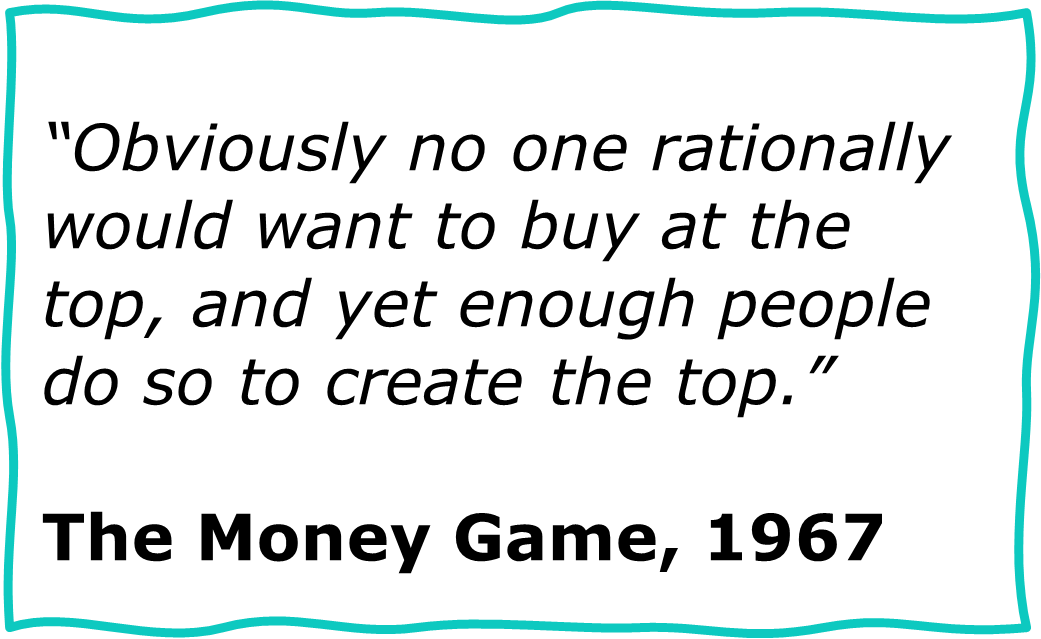
· The behaviour of Korean investors is ticking every single box for a historic mania
The latter is particularly stark, as investment fever spreads across South Korea. Retail investors talk of nothing else – over breakfast, lunch, and dinner – on tea breaks, public transport, and shopping outings. Not very well-healed pensioners are selling life policies to fund stock purchases – young people are less enamoured of studying and working hard, and more attracted to getting rich quickly in the stock market. FOMO abounds.
“Their country’s stock market is on a rampaging boom, for which there is almost no historical precedent” proclaimed one newspaper. Actually there are many precedents stretching back hundreds of years, most recently a rolling mania in the US for much of the last decade.
For old hands like me this is all very familiar, and resonates particularly with 1987 closer to home, and China in 2006/7, particularly the latter frenzy.
It will end in tears for many. But nobody knows when – Korea could double or halve from the current level. So what should you do if you have enjoyed those recent gains through our Dynamic Asian portfolio or otherwise?
If you have an Attack and Defence to drive your portfolio, for 9 years out of 10 (not literally) these are in balance. The attack is your process to select investments e.g. using our Dynamic ratings for funds, and it works consistently well achieving more growth than the index. The defence is to protect your portfolio e.g. a stop loss, and in these 9 years you don’t have to apply it too often, but it gets you out of an occasional hole.
You might also apply stop-profits.
For example, if a fund goes up 40% in a couple of months, your gain is roughly 4 times the average long term returns from US/UK stock markets over 12 months. If this was a commodity fund, say gold miners, such a big move would not be that unusual, and you might be tempted to sit tight and enjoy the party – perhaps eyeing a gain of 80% within 6-12 months. In contrast, if you are investing into mainstream economies a stock market gain of 40% in two months is certainly an outlier, almost free money. That is when you consider locking in your gains – sell the lot, sit on the sidelines and give yourself the luxury of thinking time while sitting on some cash.
Korea is such a mainstream advanced economy. GDP per head of population is slightly less than the UK and Germany, five times bigger than India, and more than twice that of China.
Clearly the Korean gain is an outlier. What other factors might sway you in considering whether to lock in your profit right now and sell the lot? Here are some:
· This is “the 10th year”. Risks are self-evidently extreme – stock market, bond market, politics, geopolitics.
· US. The pivotal global stock market is as over-valued as 1929 or 1999. It is from such peaks that multi-year downturns emerge. Yet from this vantage point, it is impossible to tell the global impact with useful precision.
· Concentration risk. Our Dynamic ratings might get us into Barings Korea, which is itself a reasonably concentrated country exposure. But the fund relies heavily on just two stocks, a further layer of extreme concentration.
· Simplify. Barings Korea is only priced once per day for UK-based investors, after their overnight market closes. So if you sell today, you sell blind, as the price is unknown until tomorrow. In contrast, you can sell a UK-traded Korea ETF intraday at a known price. This is useful simplification, and risk reduction, when events might be unfolding rapidly, and when risks are elevated (see first two bullets).
In “the 10th year”, marked out by a range of extremes and elevated risks, big profits can disappear overnight. Adapting becomes important, something you might not have had to do for many years, which is why it is not an easy adjustment.
There is no perfect solution. But it is important to know when you have to adapt. When you must tighten the Defence, and adjust the Attack. When you must take substantial profits dropped in your lap from unexpected sources.
Now to the UK, where a culture of political incompetence has been entrenched for too many years, across the political spectrum, yet where the UK stock market continues to hold huge potential if whoever camps out in Downing Street gets a grip on reality.
Firstly it must be clearly understood that if, as a government, you spend more than you take in taxes, you are in hock to the bond markets because they lend you the money to fund your extravagance. If you don’t want to be in hock to the bond markets, cut spending. And if the government wants a bigger tax take, find ways to grow the economy. That’s it.
The next obvious question is what drives the economy? What is the motor? Because if you can get more out of the motor, you will naturally generate higher taxes, and then you can fund your political agenda.
Small and medium sized businesses (SMEs) employ 60% of all those working in the private sector. This is the spine of the economy, which stretches down every High Street and through every town and village and farm in the UK. If the government didn’t get distracted by personal advancement, migration, who uses what toilets, and VAT cuts for theme parks, it would free up considerable time to think about how to turbo-charge this motor of the UK economy.
Tax incentives to re-invest into your own business; reforms to encourage investors and banks to support SMEs; tax breaks to bring young people into roles to learn new skills. You will all have your own ideas. The key is that these are presented as a coherent and plausible package, not piecemeal.
Investors are mostly giving the UK the benefit of the doubt, acknowledging the attractive valuations, and midst a drip-drip by global institutions away from the deadly embrace of the historic mania in the US. The FTSE 100 is up 4.5% in the year to date, slightly above the long-term average over such a short period. Of the major indices (ignoring Korea!), only Japan and the tech-driven US are ahead, and substantially so. Germany and France are barely moved, and India is having a bad time, down 15%.
Similarly, over the last week, with a Summer of political uncertainty assured, the main UK stock market is barely changed while most global indices are a bit lower. The mood will only have substantially changed when the small and medium sized company indices are consistently beating their larger brethren populating the FTSE100.
The big breaking news this week is the pending IPO of SpaceX at an extraordinary valuation. I will look at this more seriously next week, but for now I share with you some of the funniest bits in the IPO filing document:
· The stated mission is "to extend the light of consciousness to the stars"
· SpaceX uses the phrase "rapid unscheduled disassembly" in the filing to describe what happened when Flights 7, 8, and 9 of Starship all exploded in early 2025. This is the corporate equivalent of writing "the car experienced an unplanned stationary moment" when it crashed.
· "We are becoming a civilization with the ability to reach beyond Earth's cradle"
· "The light of consciousness will not be tied to a single planet subject to the inevitable hazards of a harsh and vast universe"
· "Our goal is to understand and explain what the universe appears to be doing"
· "We are preventing the extinction of consciousness."
Have a great weekend.This week I want to explore the excitement in Asia, where handsome gains have been thrown up by Korea and Taiwan. Then a quick thought on the UK economy, and what is needed to put a spark into the great value in small and medium-sized businesses. And lastly oil, where the news evolves by the hour – or by the tweet!
Many of you might have already spotted the huge gains in the Korean stock market, around 90% just in 2026. Some of you might also have been pleasantly surprised by how this has spiked growth in your Asian funds. If you have been utilising our Dynamic Asia and Emerging Market Portfolio, you have certainly enjoyed sharp gains. All very exciting. We have certainly enjoyed these gains in the Dennehy Wealth discretionary portfolios.
I want to explore some issues which this raises, particularly if you are managing your own money.
So far in 2026 the Korean stock market (Kospi index) is up 82%. But this doesn’t do justice to the scale of the move:
· The Korean stock market is now bigger than the UK and India
· It has been driven by just two stocks linked to the panic into AI-related stocks…
· …it is like a table with only two legs!
· The behaviour of Korean investors is ticking every single box for a historic mania
The latter is particularly stark, as investment fever spreads across South Korea. Retail investors talk of nothing else – over breakfast, lunch, and dinner – on tea breaks, public transport, and shopping outings. Not very well-healed pensioners are selling life policies to fund stock purchases – young people are less enamoured of studying and working hard, and more attracted to getting rich quickly in the stock market. FOMO abounds.
“Their country’s stock market is on a rampaging boom, for which there is almost no historical precedent” proclaimed one newspaper. Actually there are many precedents stretching back hundreds of years, most recently a rolling mania in the US for much of the last decade.
For old hands like me this is all very familiar, and resonates particularly with 1987 closer to home, and China in 2006/7, particularly the latter frenzy.
It will end in tears for many. But nobody knows when – Korea could double or halve from the current level. So what should you do if you have enjoyed those recent gains through our Dynamic Asian portfolio or otherwise?
If you have an Attack and Defence to drive your portfolio, for 9 years out of 10 (not literally) these are in balance. The attack is your process to select investments e.g. using our Dynamic ratings for funds, and it works consistently well achieving more growth than the index. The defence is to protect your portfolio e.g. a stop loss, and in these 9 years you don’t have to apply it too often, but it gets you out of an occasional hole.
You might also apply stop-profits.
For example, if a fund goes up 40% in a couple of months, your gain is roughly 4 times the average long term returns from US/UK stock markets over 12 months. If this was a commodity fund, say gold miners, such a big move would not be that unusual, and you might be tempted to sit tight and enjoy the party – perhaps eyeing a gain of 80% within 6-12 months. In contrast, if you are investing into mainstream economies a stock market gain of 40% in two months is certainly an outlier, almost free money. That is when you consider locking in your gains – sell the lot, sit on the sidelines and give yourself the luxury of thinking time while sitting on some cash.
Korea is such a mainstream advanced economy. GDP per head of population is slightly less than the UK and Germany, five times bigger than India, and more than twice that of China.
Clearly the Korean gain is an outlier. What other factors might sway you in considering whether to lock in your profit right now and sell the lot? Here are some:
· This is “the 10th year”. Risks are self-evidently extreme – stock market, bond market, politics, geopolitics.
· US. The pivotal global stock market is as over-valued as 1929 or 1999. It is from such peaks that multi-year downturns emerge. Yet from this vantage point, it is impossible to tell the global impact with useful precision.
· Concentration risk. Our Dynamic ratings might get us into Barings Korea, which is itself a reasonably concentrated country exposure. But the fund relies heavily on just two stocks, a further layer of extreme concentration.
· Simplify. Barings Korea is only priced once per day for UK-based investors, after their overnight market closes. So if you sell today, you sell blind, as the price is unknown until tomorrow. In contrast, you can sell a UK-traded Korea ETF intraday at a known price. This is useful simplification, and risk reduction, when events might be unfolding rapidly, and when risks are elevated (see first two bullets).
In “the 10th year”, marked out by a range of extremes and elevated risks, big profits can disappear overnight. Adapting becomes important, something you might not have had to do for many years, which is why it is not an easy adjustment.
There is no perfect solution. But it is important to know when you have to adapt. When you must tighten the Defence, and adjust the Attack. When you must take substantial profits dropped in your lap from unexpected sources.
Now to the UK, where a culture of political incompetence has been entrenched for too many years, across the political spectrum, yet where the UK stock market continues to hold huge potential if whoever camps out in Downing Street gets a grip on reality.
Firstly it must be clearly understood that if, as a government, you spend more than you take in taxes, you are in hock to the bond markets because they lend you the money to fund your extravagance. If you don’t want to be in hock to the bond markets, cut spending. And if the government wants a bigger tax take, find ways to grow the economy. That’s it.
The next obvious question is what drives the economy? What is the motor? Because if you can get more out of the motor, you will naturally generate higher taxes, and then you can fund your political agenda.
Small and medium sized businesses (SMEs) employ 60% of all those working in the private sector. This is the spine of the economy, which stretches down every High Street and through every town and village and farm in the UK. If the government didn’t get distracted by personal advancement, migration, who uses what toilets, and VAT cuts for theme parks, it would free up considerable time to think about how to turbo-charge this motor of the UK economy.
Tax incentives to re-invest into your own business; reforms to encourage investors and banks to support SMEs; tax breaks to bring young people into roles to learn new skills. You will all have your own ideas. The key is that these are presented as a coherent and plausible package, not piecemeal.
Investors are mostly giving the UK the benefit of the doubt, acknowledging the attractive valuations, and midst a drip-drip by global institutions away from the deadly embrace of the historic mania in the US. The FTSE 100 is up 4.5% in the year to date, slightly above the long-term average over such a short period. Of the major indices (ignoring Korea!), only Japan and the tech-driven US are ahead, and substantially so. Germany and France are barely moved, and India is having a bad time, down 15%.
Similarly, over the last week, with a Summer of political uncertainty assured, the main UK stock market is barely changed while most global indices are a bit lower. The mood will only have substantially changed when the small and medium sized company indices are consistently beating their larger brethren populating the FTSE100.
The big breaking news this week is the pending IPO of SpaceX at an extraordinary valuation. I will look at this more seriously next week, but for now I share with you some of the funniest bits in the IPO filing document:
· The stated mission is "to extend the light of consciousness to the stars"
· SpaceX uses the phrase "rapid unscheduled disassembly" in the filing to describe what happened when Flights 7, 8, and 9 of Starship all exploded in early 2025. This is the corporate equivalent of writing "the car experienced an unplanned stationary moment" when it crashed.
· "We are becoming a civilization with the ability to reach beyond Earth's cradle"
· "The light of consciousness will not be tied to a single planet subject to the inevitable hazards of a harsh and vast universe"
· "Our goal is to understand and explain what the universe appears to be doing"
· "We are preventing the extinction of consciousness."
Have a great weekend.